Top Ai Personalized Learning
Expert-reviewed rankings based on verified agency performance data.
Top Pick
1
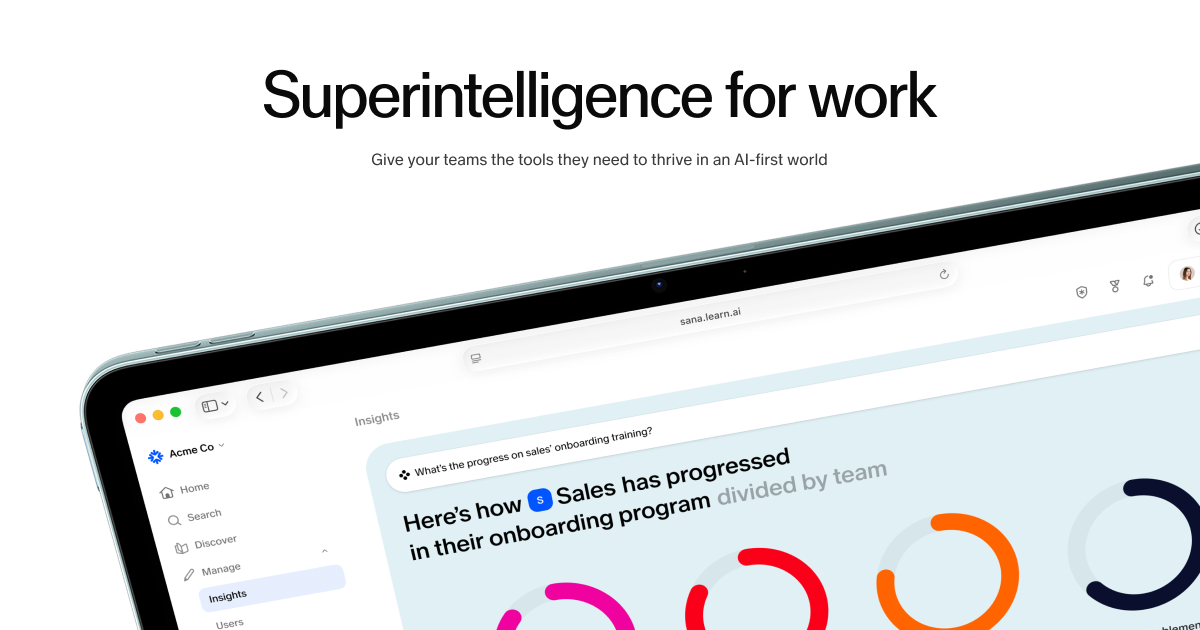
Sana Labs
Stockholm, Sweden • Est. 2016
92.4SCORE
Pros
- Integrates AI across the entire lifecycle: creation, delivery, and analysis.
- Sana AI acts as a knowledge assistant querying internal company data.
- Hyper-personalized learning paths that update after every interaction.
- Clean, world-class UI/UX that drives high engagement.
- Real-time content generation based on specific organizational needs.
Cons
- High cost tailored toward enterprise-level companies.
- Relatively new company with a smaller community of users.
- Requires deep integration with company data to reach full potential.
- Limited 'off-the-shelf' content compared to players like Coursera.
- Steep learning curve for admins creating content with AI tools.
Capterra: 88G2: 92Gartner: 94Software Advice: 90
Visit Website →2

Squirrel AI
Shanghai, China • Est. 2014
92.4SCORE
Pros
- Deconstructs subjects into ultra-fine 'knowledge points' for mapping.
- AI algorithm achieves human-level tutoring efficiency in some metrics.
- Highly localized for the Chinese K-12 education market.
- Uses a large-scale multimodal model to understand student emotions.
- Strong emphasis on closing the achievement gap in rural areas.
Cons
- Limited availability outside of the Chinese market.
- Content is primarily focused on test preparation and rote mastery.
- Privacy concerns regarding large-scale data collection on minors.
- English interface and support are significantly less developed.
- Pedagogical approach is very structured, leaving little room for creativity.
CB Insights: 85EdTech Breakthrough: 92IDC: 88MIT Technology Review: 95
Visit Website →3
Khan Academy (Khanmigo)
Mountain View, California • Est. 2008
92.1SCORE
Pros
- Khanmigo AI acts as a personal tutor without giving away answers.
- Adaptive mastery mechanics ensure students master a topic before moving on.
- AI-assisted tools for teachers to create personalized lesson plans.
- Completely free core curriculum for students worldwide.
- Real-time progress tracking with data-driven insights for parents.
Cons
- Khanmigo is currently available mostly through a pilot/donation model.
- Heavy reliance on video-based learning may not suit all styles.
- Limited subject depth in non-STEM fields for advanced levels.
- Requires consistent internet access for AI features to function.
- AI tutoring can occasionally misinterpret complex student queries.
Capterra: 92Common Sense Education: 95G2: 90PCMag: 80
Visit Website →4
Docebo
Toronto, Canada • Est. 2005
91.7SCORE
Pros
- AI-powered skills tagging and content curation for employees.
- Automated content recommendations based on job role and skills gap.
- Uses natural language processing for deep search across all content.
- AI-based virtual coach for ongoing professional development.
- Powerful automation for administrative learning management tasks.
Cons
- Enterprise-level pricing is prohibitive for small businesses.
- Complexity of features requires a dedicated LMS administrator.
- Reporting tools can be difficult to customize for specific KPIs.
- Initial setup and implementation phase is time-intensive.
- Mobile app experience is occasionally less stable than the desktop.
Capterra: 87G2: 90Gartner: 95TrustRadius: 85
Visit Website →5
Carnegie Learning (MATHia)
Pittsburgh, Pennsylvania • Est. 1998
90.4SCORE
Pros
- MATHia software mimics a human tutor’s cognitive feedback.
- Built on cognitive science research from Carnegie Mellon University.
- Provides 1-to-1 personalized coaching for every student in a class.
- Real-time 'LiveLab' alerts teachers when students need immediate help.
- Effective for both remedial work and advanced student acceleration.
Cons
- The interface can be text-heavy and daunting for some students.
- Setup and teacher training requirements are substantial.
- Strictly focused on Mathematics and Literacy.
- Software can be picky about how specific answers are formatted.
- Best suited for classroom environments rather than solo home use.
Capterra: 81Common Sense Media: 88EdTech Digest: 95G2: 84
Visit Website →6

Coursera
Mountain View, California • Est. 2012
90.3SCORE
Pros
- Uses 'Coursera Coach' AI for personalized tutoring and summaries.
- AI-driven skill mapping helps learners align courses with career goals.
- Dynamic course recommendations based on previous learning behavior.
- Adaptive assessments that adjust difficulty based on performance.
- Automated personalized feedback on coding and writing assignments.
Cons
- Full access to AI features often requires a premium subscription.
- Peer-reviewed grading can be inconsistent compared to AI grading.
- Course quality varies significantly between university partners.
- AI recommendations can sometimes feel repetitive or narrow.
- Limited live interaction despite advanced asynchronous AI tools.
Capterra: 90G2: 92PCMag: 85TrustRadius: 88
Visit Website →7

Riiid
Seoul, South Korea • Est. 2014
90.3SCORE
Pros
- Market leader in AI for standardized test prep (TOEIC, SAT).
- Uses deep learning to predict user scores with high accuracy.
- Eliminates unnecessary study time by focusing only on weak areas.
- Highly effective mobile-first interface for learning on the go.
- Strong R&D focus with many published papers on AI in education.
Cons
- Niche focus on test preparation rather than broad education.
- Limited subject matter (primarily English and Math).
- Pricing model can be confusing for individual learners.
- Requires consistent data connection for real-time AI adjustments.
- Can feel 'high pressure' due to the focus on scoring.
CB Insights: 94Fast Company: 90G2: 75HolonIQ: 88
Visit Website →8

Century Tech
London, United Kingdom • Est. 2013
89.9SCORE
Pros
- Uses neuroscience and AI to identify gaps in knowledge and memory.
- Automatically generates personalized 'nuggets' (micro-lessons) for students.
- Reduces teacher workload by automating marking and data analysis.
- Identifies cognitive patterns to predict student underperformance early.
- Seamless integration with school VLEs and MIS systems.
Cons
- Primarily focused on the UK curriculum (GCSE/A-Levels).
- Higher cost entry point for smaller educational institutions.
- Requires significant data input to maximize AI effectiveness.
- Some users report a steep learning curve for the dashboard.
- Content library is less extensive than some US-based competitors.
BETT Awards: 96EdTech Review: 88G2: 80Trustpilot: 75
Visit Website →9

DreamBox Learning
Bellevue, Washington • Est. 2006
88.7SCORE
Pros
- Proprietary Intelligent Adaptive Learning engine adjusts in real-time.
- Focuses on both procedural fluency and conceptual understanding.
- Adapts not just difficulty but also the pedagogical scaffolding.
- Provides educators with predictive insights for student intervention.
- Supports dual-language learners with adaptive English/Spanish toggle.
Cons
- Primarily targeted at K-8, limiting its use for older students.
- The interface can feel too 'childish' for middle schoolers.
- Implementation requires significant school-level coordination.
- Individual home subscriptions are relatively expensive.
- Heavy focus on Math and Reading, lacks broader subject coverage.
Capterra: 82Common Sense Media: 80EdTech Digest: 94G2: 85
Visit Website →10

Degreed
Pleasanton, California • Est. 2012
88.5SCORE
Pros
- Aggregates content from various sources into a single personalized feed.
- AI matches user skills to internal opportunities and external content.
- Focuses on 'upskilling' with data-driven skill gap analysis.
- Allows users to track informal learning (articles, podcasts) in their path.
- Strong focus on lifelong learning and professional portability.
Cons
- Can be overwhelming due to the sheer volume of content sources.
- Skill assessments are often based on self-reporting, which can be biased.
- Search functionality can sometimes return irrelevant results.
- The platform acts more as a wrapper than a primary content provider.
- Integration with older legacy HR systems can be challenging.
Capterra: 82G2: 88Gartner: 91TrustRadius: 84
Visit Website →11

Duolingo
Pittsburgh, Pennsylvania • Est. 2011
87.1SCORE
Pros
- Employs 'Birdbrain' AI to determine lesson difficulty in real-time.
- Spaced repetition algorithms optimize vocabulary retention for each user.
- AI-generated 'Roleplay' features allow for realistic conversation practice.
- Highly personalized daily goals and reminder systems.
- Gamified interface driven by behavioral data analytics.
Cons
- Advanced AI features like 'Explain My Mistake' are locked behind Max tier.
- Heavy focus on translation rather than holistic linguistic immersion.
- AI voice recognition can sometimes struggle with accents.
- Gamification can lead to prioritizing streaks over actual learning.
- Grammar explanations are often brief and lack deep context.
App Store: 94Capterra: 85G2: 88Trustpilot: 82
Visit Website →12
ALEKS (McGraw Hill)
Irvine, California • Est. 1996
85.6SCORE
Pros
- Based on Knowledge Space Theory for precise assessment of knowledge.
- Avoids multiple-choice questions in favor of open-response formats.
- Provides a clear 'Knowledge Pie' visualization of progress.
- Highly effective for prerequisite discovery in Math and Science.
- Personalized review cycles prevent students from forgetting old material.
Cons
- The user interface feels outdated and less engaging.
- Open-response input can be frustrating for students with poor typing skills.
- Limited flexibility for teachers to skip pre-set learning paths.
- Can feel repetitive and discouraging for struggling learners.
- Heavy focus on STEM with no coverage for humanities.
Capterra: 84G2: 78Gartner: 89TrustRadius: 81
Visit Website →13
Knewton (Alta)
New York, New York • Est. 2008
85.4SCORE
Pros
- Mastery-based learning that provides just-in-time remediation.
- Highly affordable alternative to traditional textbooks.
- AI identifies missing foundational skills and diverts students to fix them.
- Integrated with Wiley's high-quality academic content.
- Detailed data dashboards for instructors to monitor class struggle spots.
Cons
- Primarily limited to higher education introductory courses.
- Dependency on textbook content limits broader application.
- Adaptive paths can sometimes lead students into 'loops' of remediation.
- User interface is functional but lacks modern aesthetic appeal.
- Integration with some LMS platforms can be technically finicky.
CODiE Awards: 90Capterra: 80G2: 82TrustRadius: 78
Visit Website →14
.png)
Smart Sparrow (by Pearson)
Sydney, Australia • Est. 2010
85.2SCORE
Pros
- Enables creators to build rich, interactive, and adaptive content.
- AI provides pedagogical suggestions to course designers.
- Data-driven insights help identify where groups of students are stuck.
- Supports highly visual and simulation-based learning paths.
- Integration into the Pearson+ ecosystem provides massive reach.
Cons
- Platform transition following Pearson acquisition caused some confusion.
- More of a toolkit for creators than an end-user platform.
- Requires significant instructional design expertise to use well.
- Can be expensive for individual instructors or small schools.
- Integration into Pearson's broader ecosystem can feel restrictive.
Capterra: 80EdTech Review: 90G2: 82TrustRadius: 76
Visit Website →15

Udacity
Mountain View, California • Est. 2011
83.2SCORE
Pros
- Personalized feedback from human mentors augmented by AI review tools.
- Strong focus on 'Nanodegrees' that adapt to industry demand.
- AI-powered project reviews provide quick turnaround for students.
- Curated learning paths specifically for technical and digital roles.
- Strong partnerships with industry giants like Google and AWS.
Cons
- Higher price point compared to other MOOC platforms.
- Learning paths can be very intensive and difficult for beginners.
- Recent shifts in business model toward enterprise focus.
- Course updates can sometimes lag behind rapid software changes.
- AI features are less 'chat-focused' and more backend-oriented.
Capterra: 83G2: 85PCMag: 78TrustRadius: 80
Visit Website →